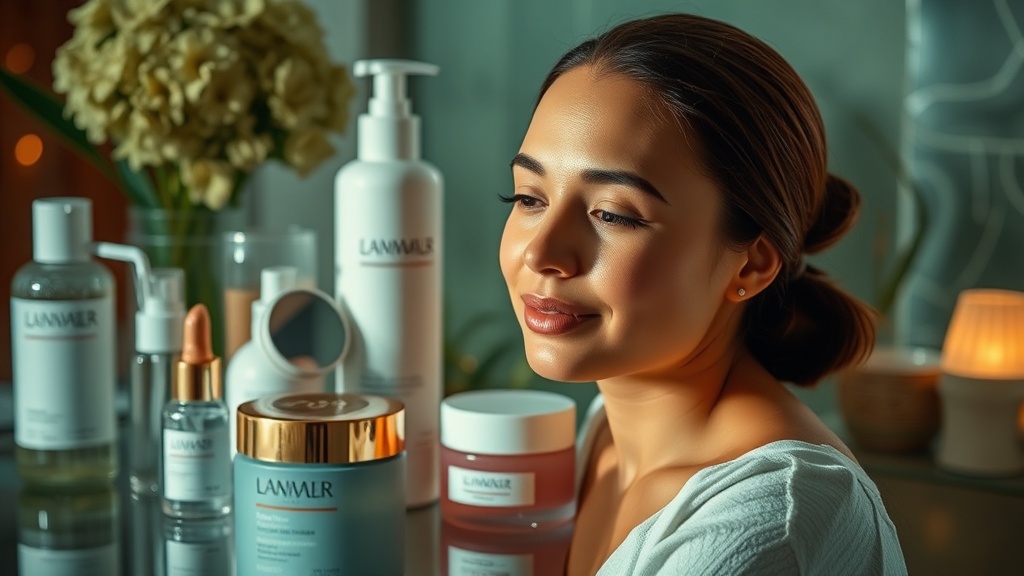
Layering Your Skincare Products in the Right Order

Did you know that applying a heavy facial oil before your water-based serum can actually prevent that serum from ever reaching your skin? It's a common mistake that renders expensive products useless. This post breaks down the exact sequence for layering skincare products to ensure your active ingredients actually work. We'll look at the science of molecular weight, the difference between AM and PM routines, and how to avoid common mistakes that cause irritation.
Why Does the Order of Skincare Products Matter?
The order matters because skincare products are formulated with different molecular weights and textures to penetrate the skin at specific depths. If you apply a thick, oil-based cream before a thin, water-based toner, the cream acts as a barrier—blocking the toner from absorbing. You're essentially wasting your money if the sequence is wrong.
Think of it like a sponge. If you pour water on a dry sponge, it absorbs instantly. If you coat that sponge in heavy grease first, the water just sits on top. Your skin works the same way. To get the most out of your products, you need to move from the thinnest consistency to the thickest. This ensures each layer can actually penetrate the epidermis without being blocked by a heavier lipid layer.
A good rule of thumb is the "thin-to-thick" rule. It's a simple way to keep things straight. If you're using a serum like the Paula's Choice Skin Perfecting 2% BHA Liquid Exfoliant, you want that liquid to hit your skin while it's still fresh and unobstructed. If you've already applied a heavy moisturizer, that BHA isn't going anywhere.
What Is the Correct Order for a Morning Skincare Routine?
The correct morning order is a cleanser, followed by a toner, a serum, a moisturizer, and finally, sunscreen. The goal in the morning is protection from environmental stressors and UV rays.
Morning routines should be relatively lightweight. You want to prep your skin for the day without feeling greasy by lunchtime. Here is a standard breakdown of a high-performing AM sequence:
- Cleanser: A gentle, non-stripping cleanser to remove any sweat or leftover night products.
- Toner: This helps balance pH and prepares the skin for better absorption.
- Vitamin C Serum: Antioxidants like Vitamin C are great for fighting free radicals.
- Hydrating Serum: A hyaluronic acid serum (like those from The Ordinary) adds moisture.
- Moisturizer: A lightweight lotion to lock in hydration.
- Sunscreen: The most important step. SPF should always be your final skincare layer.
One thing to remember: sunscreen is your shield. If you put a moisturizer on top of your sunscreen, you're diluting the SPF and potentially creating gaps in your protection. I've seen people do this—it's a bad idea. Always make sure your SPF is the last "treatment" step before you apply makeup.
If you're interested in how to protect more than just your face, check out our guide on sunscreen beyond the face. It's a vital part of a full-body protection strategy.
How Should I Layer Nighttime Skincare?
The nighttime order is a cleanser, a treatment (like a retinol or exfoliant), a hydrating serum, and a heavier moisturizer or facial oil. Nighttime is when your skin focuses on repair and regeneration.
Since you aren't worried about sun protection at 10 PM, you can afford to use much heavier, more occlusive products. This is the time for "slugging" or using rich creams that might be too heavy for daytime wear. If you're using a prescription-strength retinoid, you'll want to follow the specific advice from your dermatologist, but generally, the retinol goes on after your light serums but before your heavy cream.
A typical PM sequence might look like this:
- Double Cleanse: Use an oil-based cleanser to remove makeup/SPF, then a water-based cleanser to clean the skin.
- Exfoliant or Treatment: This is where you use your chemical exfoliants or Retinoids.
- Hydrating Serum: To replenish water levels.
- Night Cream: A thicker, more nourishing cream.
- Facial Oil: The final step to seal everything in.
Using a facial oil as the final step is a pro move. It creates an occlusive seal, meaning it traps the moisture from your serums and creams underneath it. Without that seal, much of the hydration you applied might evaporate through a process called transepidermal water loss.
How Do I Layer Different Actives Without Irritation?
You should avoid layering certain active ingredients together to prevent chemical burns or skin irritation. Specifically, don't mix Vitamin C with Retinol or high-percentage AHAs/BHAs in the same session.
Mixing too many strong actives can wreck your skin barrier. If you use a strong exfoliating acid and a retinol at the same time, you're asking for redness and peeling. Instead, use a "skin cycling" method or alternate them by time of day. For example, use your Vitamin C in the morning and your Retinol at night. This keeps your skin protected during the day and repaired at night without the constant irritation.
Here is a comparison of how different textures interact with your skin's absorption:
| Product Type | Texture/Consistency | Primary Function | Typical Step |
|---|---|---|---|
| Toner/Essence | Watery/Liquid | Hydration & pH | Step 2 (Early) |
| Serums | Gel or Light Liquid | Targeted Treatment | Step 3 (Middle) |
| Lotions | Light Cream | Moisture/Barrier | Step 4 (Late) |
| Face Oils | Oil/Viscous | Occlusion/Sealing | Step 5 (Final) |
It's also worth noting that if you have highly sensitive skin, you might want to check Wikipedia's entry on skin irritation to understand how different substances can trigger a reaction. A reaction is often a sign that your layers are clashing or that an ingredient is too strong for your current barrier state.
When you're trying to figure out if a product is working, look at the consistency. If you've applied a serum and it feels like there's a film on top, you've likely applied it over something too heavy. It's a frustrating feeling when you've spent a lot of money on a high-end serum and it just sits on the surface like a bead of water on a waxed car.
If you're ever in doubt, go back to basics. Sometimes, less is more. If your skin feels tight or irritated, you might be over-layering too many active ingredients. You can learn more about tailoring your routine to your specific needs in my post about tailoring your skincare for individual needs.
The key is patience. Give each layer a few seconds to sink in before applying the next. You don't need to wait ten minutes, but you shouldn't rush through it either. A little bit of waiting ensures the next layer can actually do its job instead of just sliding around on top of the previous one.
If you're using high-tech tools like a facial roller or a microcurrent device, these usually come after your serum but before your heavy cream. This allows the device to drive the active ingredients deeper into the skin. If you're curious about other ways to boost your results, take a look at these high-tech tools for a spa-quality glow.
Steps
- 1
Start with Cleansing
- 2
Apply Water-Based Serums
- 3
Introduce Targeted Treatments
- 4
Seal with Moisturizer
- 5
Finish with Facial Oils or SPF